
I’ve investigated many curious and creepy places over the years but despite being recommended to me several times, I had yet to go to Taxal and its unusual church. On a rare sunny day, I finally decided to take the plunge. However, as you shall soon find out, the church was not the only reason for a nervous glance over the shoulder.

My journey to Taxal was cheerful enough, enjoying a short bus ride from the town of Buxton to the village of Fernilee, then walking for about a mile along picturesque if somewhat overgrown trails. The sun had risen to its zenith and I emerged from the trees, blinking in the light, my heart beating with both exertion and anticipation. I had been told that Saint James’ Church in Taxal was a spooky place and much to my amazement, I had marched straight out of the wilderness and into its churchyard without seeing anything else of the village first. I had suddenly reached my destination.
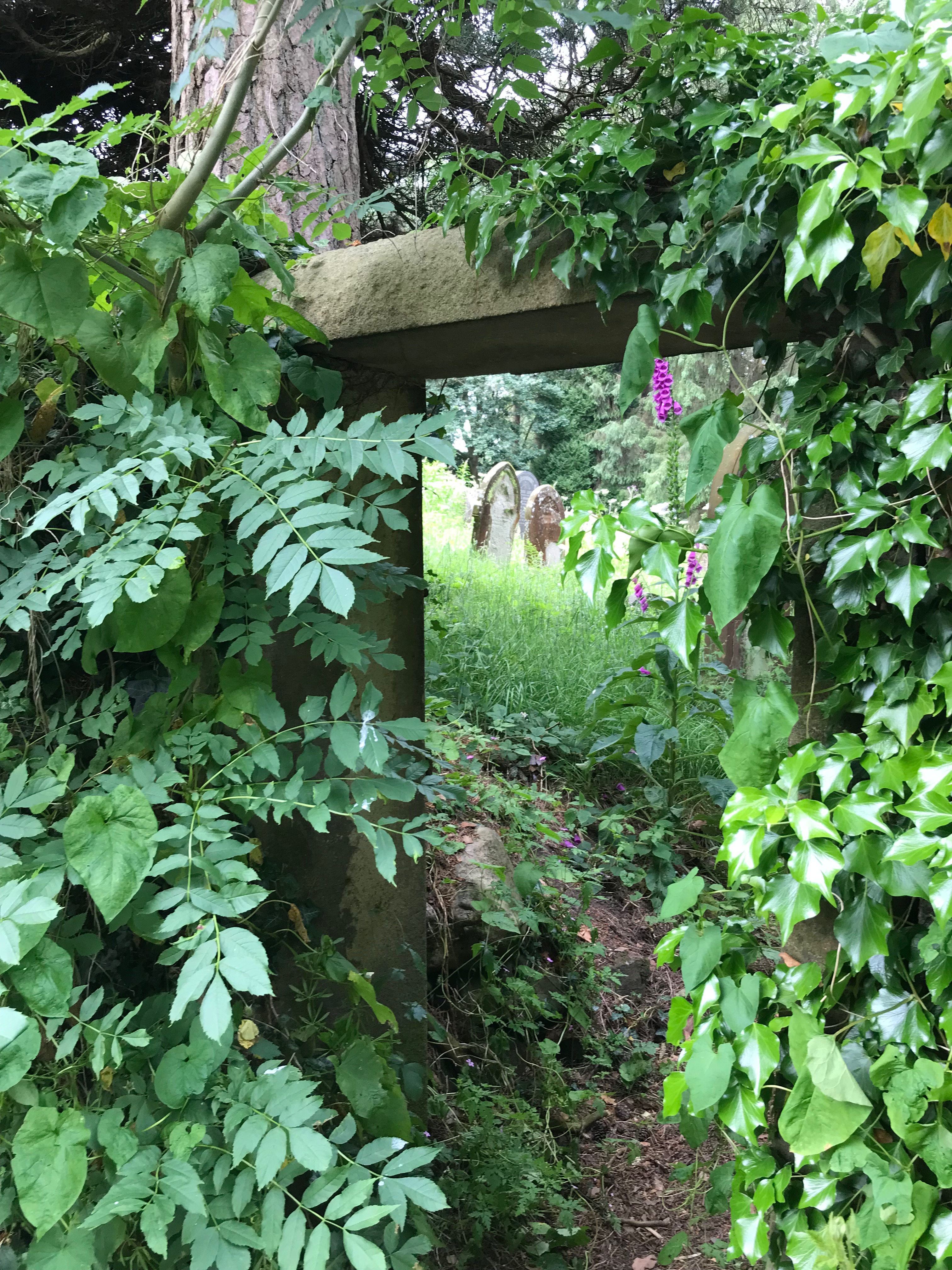
Expecting to wander onto something that looked like a Hammer Horror film set, I found both the church and the churchyard were quite pleasant and not remotely terrifying. Admittedly, the churchyard is proportionally generous for the tiny village stapled to it and much of it is surrounded by an impenetrable wall of wild, imposing trees. Parts of the church building date back to the 12th century and it drips with age, like a wise and silent methuselah. Likewise, some of the headstones are crooked with the passage of time. I can imagine at different times of the year, it takes on a different demeanour and therefore easier to envision Christopher Lee in a cloak, floating through the graves but at that moment, surrounded by butterflies gently fluttering around the foxgloves, it seemed perfectly peaceful.

As I wandered the churchyard, staring at graves from different centuries, the sense of antiquity grew, as did that of my own isolation. Since getting off the bus a mile back, I had yet to lay eyes on another living soul. I had been told that the grass of the churchyard is often kept under the control of two donkeys that have biblical names but my visit was donkey-free. Perhaps it was their day off? Or perhaps this was all a wind up? The people that had told me to go to Taxal and look out for the donkeys would suddenly leap out from behind the bushes, bent double with laughter. But no, still alone.

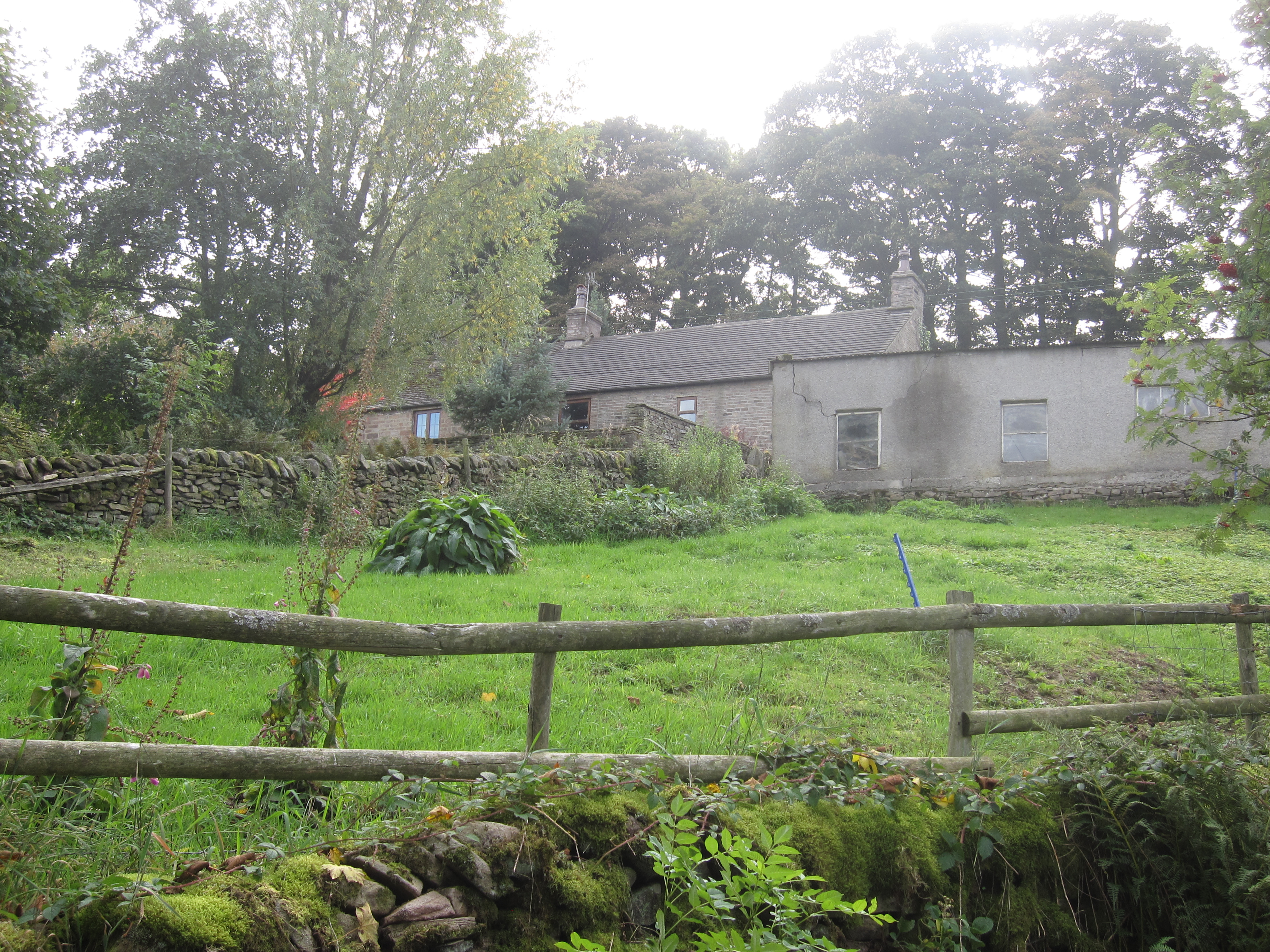
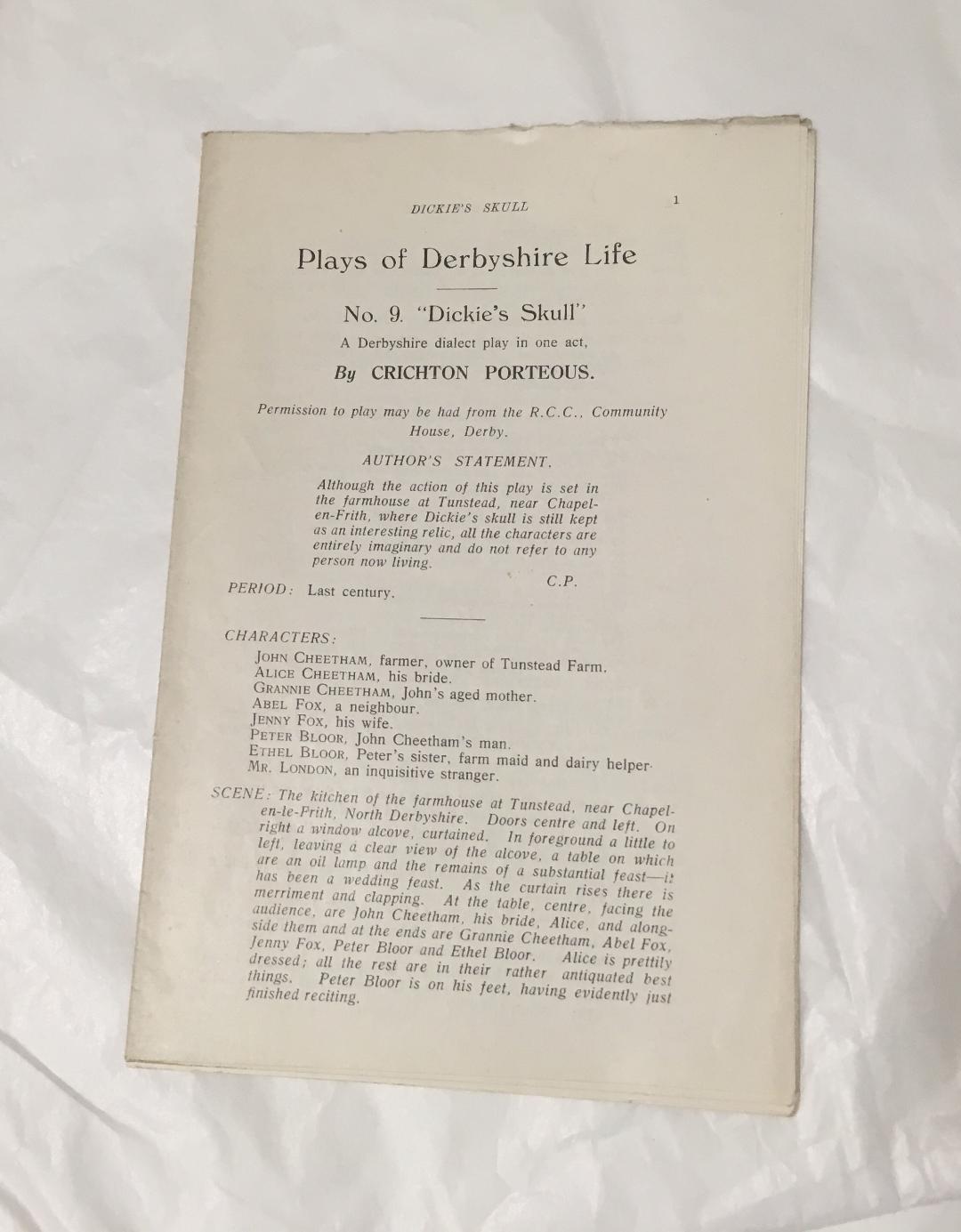
The big question was: Was Dicky here? A few years ago, I did my best to recount the local legend of Dicky’s skull. You can read that epic here or the short version is: A nearby farm was home to a mysterious skull for many years and the lore was that if anyone disturbed the woeful artefact, awful things would happen. Whilst researching this tale, someone suggested that the skull eventually found its way here, at Saint James’, to receive a proper burial, and hopefully, an end to the curse-ridden mayhem. However, a knowledgeable man called Andrew Lomas got in touch more recently and proposed that the information was incorrect and that it had become mixed up with another incident. In Andrew’s own words:
On reading the suggestion the skull had been buried in Taxal churchyard decades ago, it reminded me of an actual burial at Taxal. The severed arm of a worker on the Cromford and High Peak Railway at Shallcross Yard. The arm was initially buried over the wall on the day of the accident, hearing the news that evening in the Shepherd’s Arms pub, the Vicar instructed the man’s colleague to retrieve it in the morning and bring it to Taxal, where it was buried under the wall side. This would be around 1880 I think (maybe a little earlier). I have never heard the account of Dickie’s skull being buried in Taxal. My Grandfather was born in the Goyt Valley, at a farm long since demolished, to a large family of farmers all over the area. He talked about the skull quite often but never mentioned the Taxal Church burial, despite Taxal being the local church for the family. I just wonder if in the mists of time and memory, the arm story has become the explanation for the missing skull?
Andrew’s familiarity with the area seems a solid basis for a revaluation of the facts. It may be true that Taxal was the final resting place for a singular body part that had survived some horrific event but perhaps not poor Dicky’s bonce. The eventual fate of the blighted cranium may never be known but if anyone out there can shed any more light on the matter, please get in touch.

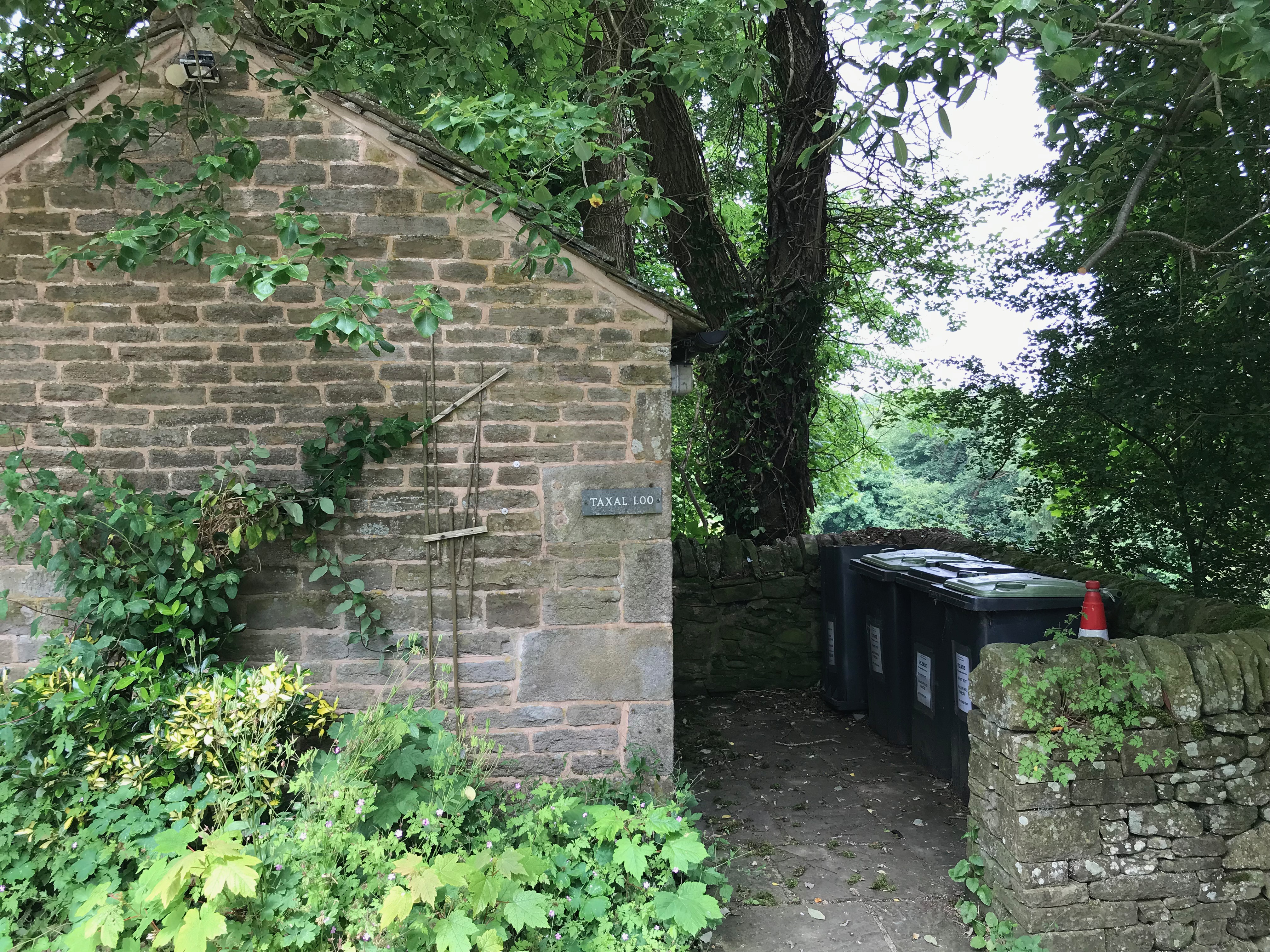
I decided to move on and investigate another of Taxal’s mysteries, which was much closer than I expected. In fact, Taxal is so small that it barely seems to exist. It does, however, most conveniently, have the most fantastic public loo. It’s right next to the church and very handy. In this day and age, where you are often forced to wander for miles before reaching a public lavatory in the largest of cities, the most diminutive of settlements turns out to be the most thoughtful. You can leave a financial contribution, as well as a biological one.
When I told another man of knowledge, Patrick Sutton, that I was going to Taxal, he told me about Quarry Bank House, where he used to live as child. I can’t tell the story any better than Patrick:
My family used to live in the house Quarry Bank on Lanehead Rd. This is the first house on the right as you turn onto Lanehead Rd from Linglongs Rd. It has an old quarry in the garden, hence the name. We moved there from Buxton in about 1964. After a few weeks of living there, people in Whaley Bridge kept asking my parents if we were OK and happy in the house, we were, but it transpired that the house had the reputation of being haunted. The story goes that somebody had died in the quarry whilst it was still active. We only started to notice some odd happenings after we had lived there for a few months.
My father got up one night as he heard footsteps running down the road and onto our gravel drive. It was a bright moonlit night, but although he could track the sounds of the footsteps, he could see nobody. These running footsteps became quite regular, running from the moor and into the lower level of the house which was where the stone cutting equipment of the old quarry used to be and by then was then a garage and storage area. I remember as a teenager being in there one night cleaning it up in preparation for a party. I heard the steps, did not see anything, but had a very strong sensation that I had to leave the room, which I did. Not a pleasant experience.
These running steps from the moor to the house passed two other houses on the way. I had school friends in both houses and both of them and their parents had heard the running steps. We had a visitor one night who was leaving in his car and heard the steps. He stopped as he assumed he had left something behind and one of us was running to bring it to him. He saw nobody, but his car was buffeted as the steps passed.
The running footsteps became known as “poor cold Fred” by our family. Occasionally you would hear footsteps upstairs. Once when we had a friend staying, he heard the steps when he was on the upstairs landing and swears blind something whispered in his ear. He unfortunately was too disturbed by it, to remember what was said.
I only saw what I assume was him once. I woke up staring at what should have been the ceiling to see the face and upper body of an old man. Very distinctive with side whiskers and wearing a tweed jacket. I just laid there transfixed until my Mother entered the room. She said that she had sensed that something was wrong, so came to check on me. I had neither shouted nor made a noise. She did not see the apparition, but just saw me lying there staring at the ceiling. This could obviously have been a dream, but it felt very real at the time and it was odd that my Mother also felt that something was wrong.
My background in science and engineering leads me to be very sceptical about all things ghostly, but these were my experiences growing up at Quarry Bank and I have not really got any explanations for them.
I contemplated Patrick’s experiences as I walked past the house. I didn’t want to bother the current residents and I would urge you to do the same. Taxal is a quiet place so let’s endeavour to keep it that way!

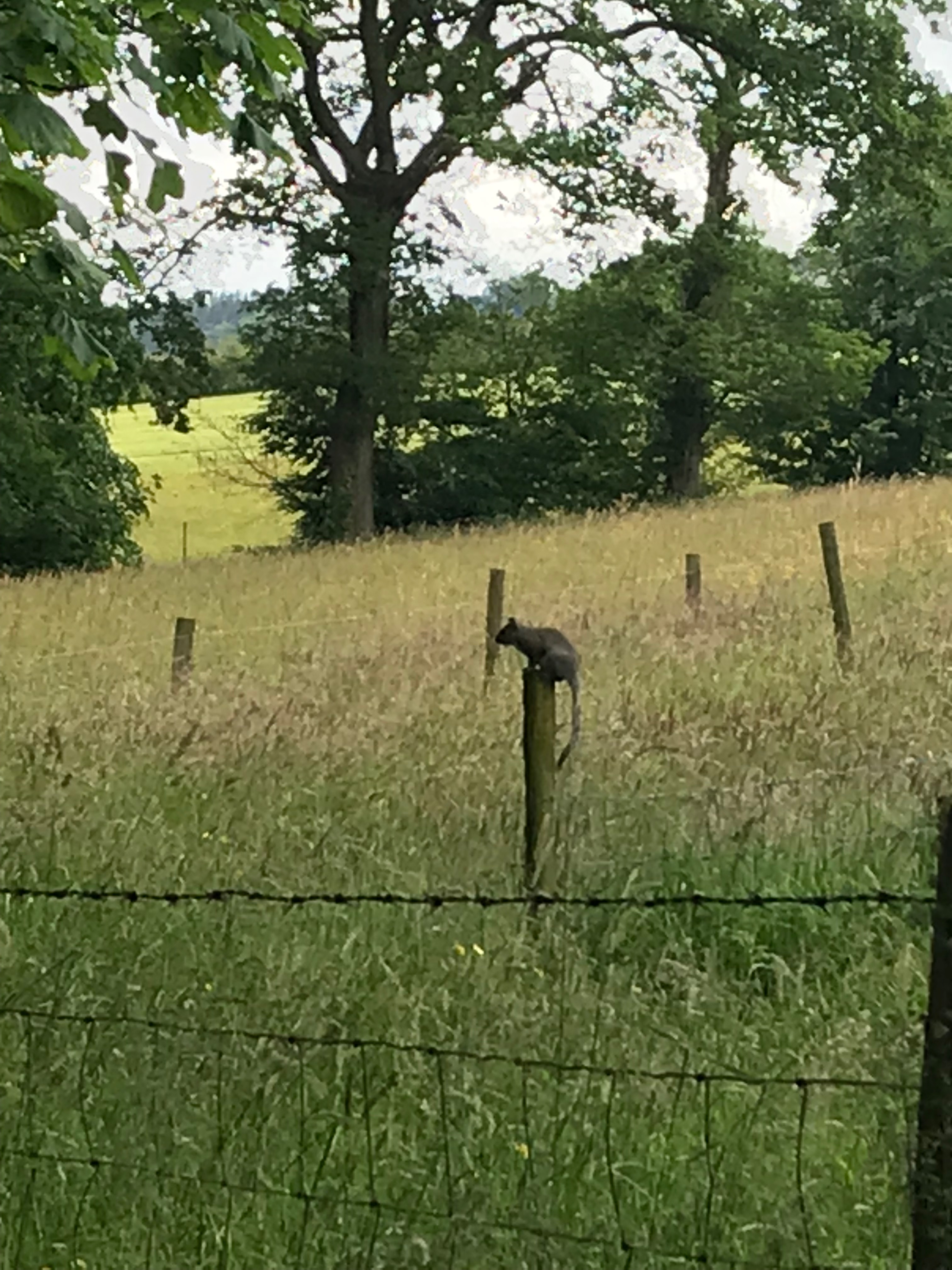
My visit to Taxal was brief yet fascinating. It felt like a place slightly removed from the modern world and it was easy to contemplate the existence of the otherworldly. I walked on to the relative metropolis of Whaley Bridge in search of refreshments and as I took one final glance at Taxal, I had the sensation of gazing back into time, perhaps even into a dream. It occurred to me that I still hadn’t seen another human being since my arrival, which only reinforced my peculiar reverie. As I walked along the lonely country lane, I heard a rustle in the bushes and a curious critter emerged, looking a bit like a squirrel without a bushy tail. Not Poor Cold Fred, nor Dicky’s Skull, nor a donkey named Joseph, but weird enough.
If you have tales of Taxal, or anywhere, I’m all ears: email Darcus Wolfson at jayceebeejay@yahoo.co.uk or leave a comment It could be the basis for the next investigation!
Thanks to Andrew Lomas, Patrick Sutton and Isobel Jenkins


 world of wolfson